
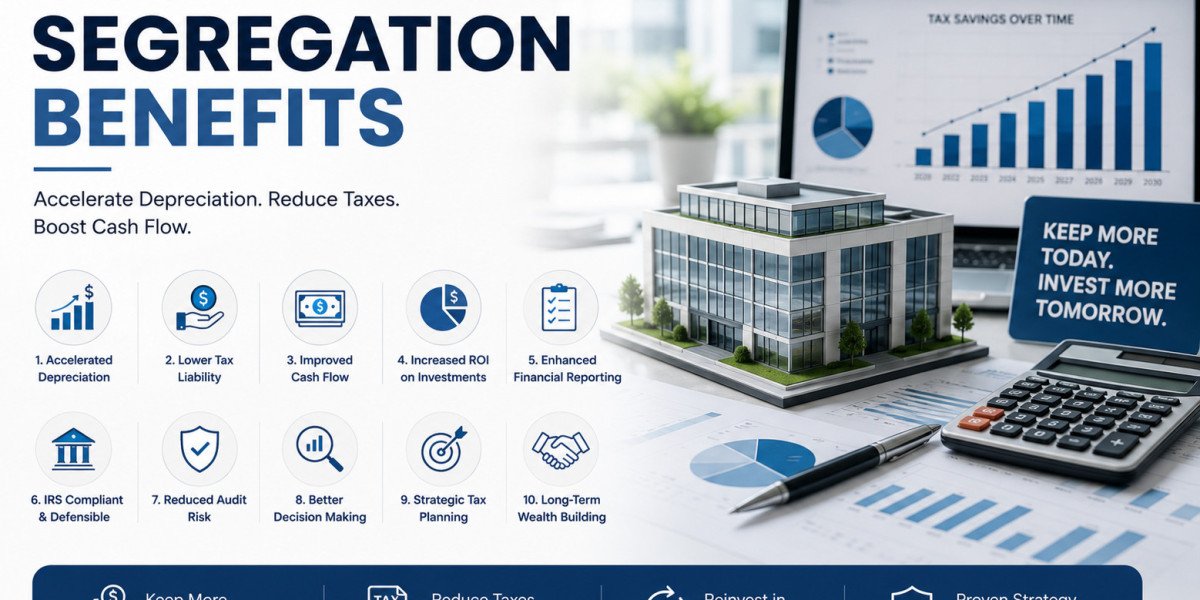
For commercial property owners and real estate investors, taxes can significantly impact cash flow and overall investment returns. Fortunately, the U.S. tax code offers strategies that allow businesses to recover property costs faster and reduce taxable income. Two of the most effective tools are cost segregation and bonus depreciation.
While these strategies are often mentioned together, they serve different purposes. A cost segregation study identifies building components that qualify for shorter depreciation periods, while bonus depreciation may allow businesses to deduct a significant portion of the cost of eligible assets in the year they are placed in service, subject to the rules in effect for that tax year.
When used together and where applicable, these strategies can accelerate tax deductions, improve cash flow, and provide additional capital for business growth.
In this guide, you'll learn how cost segregation benefits and bonus depreciation work, their key differences, who qualifies, and how they can help maximize tax savings in 2026.
What Is Cost Segregation?
Cost segregation is a tax planning strategy that identifies and reclassifies certain building components into shorter depreciation lives.
Instead of depreciating an entire commercial building over 39 years (or residential rental property over 27.5 years), a professional cost segregation study separates qualifying assets into categories such as:
- 5-year property
- 7-year property
- 15-year property
- 27.5-year property
- 39-year property
Examples of assets that may qualify for shorter recovery periods include:
- Decorative lighting
- Specialized electrical systems
- Carpeting
- Vinyl flooring
- Cabinets
- Parking lots
- Sidewalks
- Landscaping
- Fencing
- Security systems
Accelerating depreciation allows businesses to recover costs sooner rather than waiting decades.
What Is Bonus Depreciation?
Bonus depreciation is a federal tax incentive that allows taxpayers to immediately deduct a percentage of the cost of qualifying property in the year it is placed in service, subject to the rules applicable for that tax year.
Unlike standard depreciation, which spreads deductions over several years, bonus depreciation accelerates cost recovery by allowing larger deductions upfront for eligible assets.
Because bonus depreciation rules have changed over time and may continue to change through future legislation, businesses should verify the applicable percentage and eligibility requirements with a qualified tax professional before filing.
How Cost Segregation and Bonus Depreciation Work Together
Cost segregation and bonus depreciation complement each other.
Here's how the process typically works:
- A cost segregation study identifies assets eligible for shorter depreciation lives.
- Eligible assets are separated from the building structure.
- Qualifying assets may also be eligible for bonus depreciation under current tax rules.
- The remaining building continues to be depreciated over its standard recovery period.
This combination often produces larger first-year deductions than traditional depreciation alone.
Key Benefits of Combining Cost Segregation and Bonus Depreciation
1. Accelerated Tax Deductions
Traditional depreciation spreads deductions over decades.
Cost segregation identifies shorter-life assets, and bonus depreciation may allow a substantial portion of those qualifying assets to be deducted much earlier, improving tax efficiency.
2. Improved Cash Flow
Lower taxable income generally reduces current tax obligations.
The resulting cash savings can be used to:
- Expand operations
- Renovate properties
- Purchase equipment
- Acquire additional real estate
- Reduce debt
- Increase working capital
Improved liquidity gives businesses greater financial flexibility.
3. Higher Return on Investment
Keeping more cash in the business allows owners to reinvest sooner.
Many investors use these tax savings to:
- Purchase additional investment properties
- Upgrade existing buildings
- Improve tenant experiences
- Fund future expansion
Accelerated depreciation can increase the long-term return on commercial real estate investments.
4. Better Tax Planning
Cost segregation gives businesses greater control over when depreciation deductions occur.
This flexibility allows tax professionals to align deductions with periods of higher taxable income and develop more effective long-term tax strategies.
5. Increased Property Value Through Reinvestment
The additional cash generated from accelerated deductions can be reinvested into:
- Building improvements
- Energy-efficient upgrades
- Property maintenance
- New construction
- Business expansion
These investments can improve both property value and long-term profitability.
Which Properties Benefit Most?
Cost segregation studies are commonly performed for:
- Office buildings
- Apartment complexes
- Hotels
- Medical offices
- Retail centers
- Warehouses
- Manufacturing facilities
- Restaurants
- Self-storage facilities
- Mixed-use commercial properties
Properties that have recently been purchased, constructed, or significantly renovated often present the greatest opportunities for accelerated depreciation.
What Assets May Qualify?
A professional cost segregation study evaluates numerous building components.
Examples include:
Five-Year Property
- Carpeting
- Specialty flooring
- Decorative lighting
- Dedicated electrical systems
- Certain cabinetry
Seven-Year Property
- Certain equipment and furnishings, depending on applicable tax classifications
Fifteen-Year Property
- Parking lots
- Sidewalks
- Landscaping
- Exterior lighting
- Retaining walls
- Fencing
The remaining structural components continue to follow the standard depreciation schedule.
Important Considerations Before Using These Strategies
Before implementing cost segregation or claiming bonus depreciation, businesses should consider several factors.
Property Value
Higher-value commercial properties generally produce larger tax benefits because there are more depreciable assets available for analysis.
Holding Period
Businesses planning to hold a property for many years often realize greater cash flow benefits from accelerated depreciation.
Owners expecting to sell in the near future should evaluate the long-term tax implications with their advisors.
Taxable Income
Businesses with significant taxable income may benefit more from accelerated deductions than businesses operating at a loss.
Proper planning ensures deductions are used effectively.
Quality of the Cost Segregation Study
A cost segregation study should be completed by experienced professionals using recognized engineering and tax methodologies.
A thorough report provides strong documentation to support depreciation classifications.
Common Misconceptions
"Cost Segregation Is Only for Large Companies"
Not true. Small and mid-sized businesses that own qualifying commercial real estate may also benefit from a properly conducted study.
"Bonus Depreciation Applies to Every Asset"
No. Eligibility depends on the type of property and the tax rules in effect for the year the property is placed in service.
"Traditional Depreciation Is Always Better"
Traditional depreciation is simpler, but it often delays tax deductions that could otherwise improve near-term cash flow.
Frequently Asked Questions
What is the relationship between cost segregation and bonus depreciation?
Cost segregation identifies assets eligible for shorter depreciation periods. Qualifying assets identified through the study may also qualify for bonus depreciation under current tax law, allowing faster cost recovery where applicable.
Does every property qualify for cost segregation?
Not every property will generate meaningful tax savings. Commercial buildings, rental properties, and properties with substantial improvement costs are often the best candidates.
Is a professional study necessary?
Yes. A professionally prepared cost segregation study provides the engineering analysis and documentation needed to support asset classifications and depreciation treatment.
Should businesses use both strategies?
Many businesses benefit from combining cost segregation and bonus depreciation, but the decision depends on the property's characteristics, current tax rules, and the business's overall tax position. Professional tax advice is essential.
Final Thoughts
Understanding cost segregation benefits and bonus depreciation can help commercial property owners and real estate investors make smarter tax planning decisions. Cost segregation accelerates depreciation by identifying building components with shorter recovery periods, while bonus depreciation may allow qualifying assets to be deducted more quickly under applicable tax rules. Together, these strategies can improve cash flow, reduce current tax liability, and free up capital for reinvestment.
However, every property and tax situation is unique. The potential benefits depend on factors such as property type, acquisition cost, renovation history, ownership goals, and current tax legislation. Before implementing either strategy, work with experienced tax advisors and cost segregation specialists who can evaluate your property, prepare a compliant study, and help you maximize available tax benefits while meeting IRS requirements.







