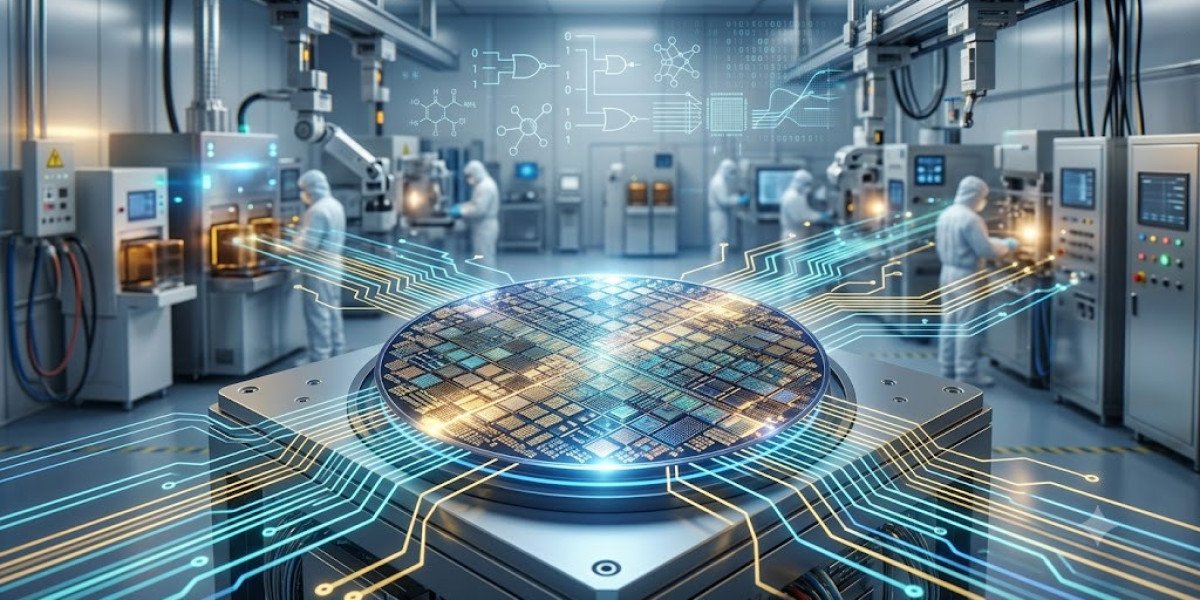
Technological evolution within sensing hardware and processing algorithms is reshaping how multi-sensor data is interpreted across physical environments. Examining the Sensor Fusion Market Trends reveals a shift from isolated, sensor-specific processing microcontrollers toward unified, AI-accelerated perception stacks. Modern systems increasingly leverage artificial intelligence, deep learning architectures, and high-performance neural processing units to solve complex spatial perception challenges in real time.
A key trend is the development of AI-based sensor fusion algorithms that replace legacy mathematical estimators. Traditional Kalman filtering methods often struggle with highly non-linear environmental conditions or unexpected sensor noise anomalies. Transformer-based neural networks and deep convolutional models can process heterogeneous sensory streams synchronously, learning spatial relationships directly from training datasets. These neural fusion models dynamically weight inputs based on environmental reliability—such as reducing camera dependency during nighttime or decreasing radar reliance in cluttered reflective environments—yielding superior object detection and tracking precision.
Another influential trend is the advancement and miniaturization of solid-state LiDAR sensors and 4D imaging radar units. Mechanical spinning LiDARs are rapidly giving way to compact, solid-state optical phased array (OPA) and MEMS-based LiDAR units, significantly reducing unit costs and mechanical failure risks. Concurrently, 4D imaging radar technology provides high-resolution elevation mapping alongside velocity vector data, bridging the gap between traditional radar and optical sensors. Integrating these advanced sensors into a unified fusion stack grants autonomous platforms clear spatial vision without exceeding hardware cost budgets.
Edge computing architectures and standardized sensor communication protocols represent a pivotal shift in system design. As the volume of data generated by multi-camera and high-resolution LiDAR arrays exceeds gigabits per second, vehicle and industrial communication buses are adopting Automotive Ethernet, MIPI CSI-2, and Time-Sensitive Networking (TSN). Processing this sensory telemetry locally at edge nodes reduces computational latency to sub-millisecond thresholds—an essential prerequisite for real-time safety systems like collision avoidance and robotic motion control. These continuous innovations ensure sensor fusion solutions remain highly scalable across diverse technological ecosystems.
Top Trending Reports :
Data Center It Asset Disposition Market
Data Center Rack Enclosure Market