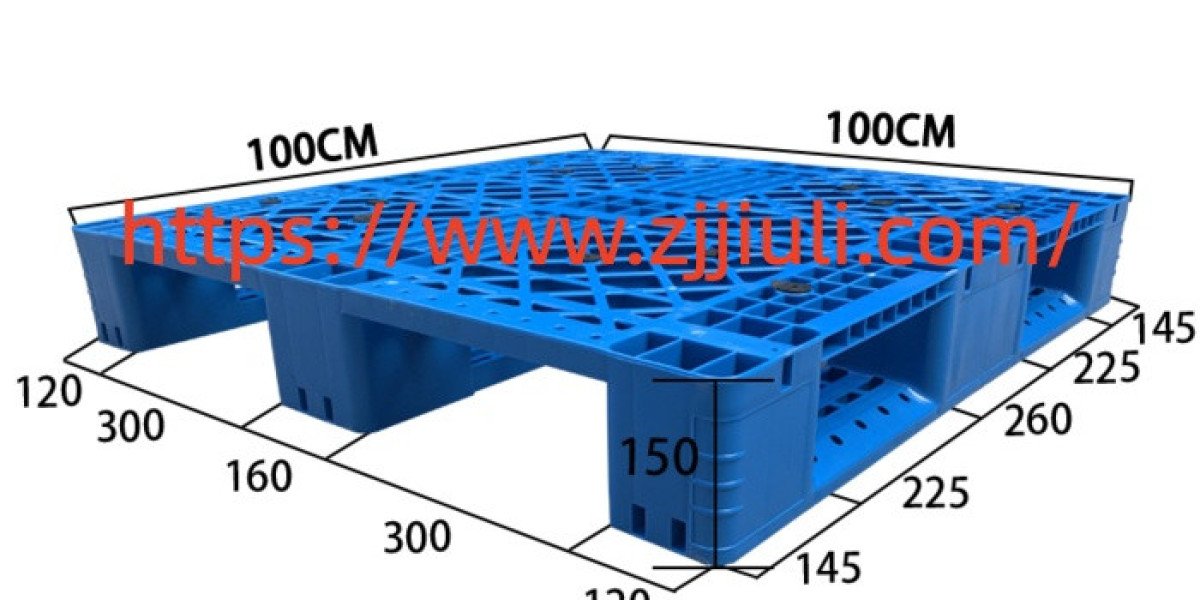
Flat Pallets come in two main surface styles that affect how goods rest and how air or liquids move. One style features a continuous closed top that creates a solid contact area. The other uses a pattern of openings that allow airflow and drainage through the structure.
The closed version presents a continuous plane so smaller packages or bags remain fully supported without risk of partial sinking into gaps. This layout spreads weight more evenly across the entire upper area and limits concentrated stress points that could form under uneven loads. Cleaning teams can wipe or rinse the whole surface in one continuous motion because there are no recesses that trap residue.
In contrast the open pattern reduces the amount of material used in the upper layer. The resulting openings let excess moisture escape and promote air circulation around stacked goods. This can prove useful when products release humidity or when temperature controlled spaces require free movement of conditioned air around the load. The lighter construction also lowers the empty unit weight which aids handling when large numbers of empty bases return to the origin point.
Load distribution behaves differently under each approach. A solid surface converts point pressures into broader surface pressures so the base remains stable even if the cargo is not perfectly centered. An open surface relies on the remaining ribs and cross members to carry the weight. Operators therefore need to confirm that the remaining structure matches the expected static and moving forces in their specific setting.
Hygiene routines also diverge. Continuous surfaces leave fewer places for particles to lodge so sanitation cycles finish faster and visual checks confirm cleanliness more readily. Open designs require attention to the edges of each opening during washing to ensure no buildup remains in the channels. Facilities that follow strict residue control often prefer the continuous option for that reason.
Weight savings appear with the open style because less resin forms the upper layer. The difference becomes noticeable when calculating total shipment mass for outbound loads or when stacking empty units for return transport. Closed versions trade some of that weight reduction for the added continuous support and simpler cleaning path.
Compatibility with automated systems can favor either style depending on the conveyor or transfer equipment in place. Sensors and pushers that contact the upper face interact more predictably with a continuous plane while some drainage oriented lines benefit from the open channels.
Entry points for forklifts and hand trucks remain available in both constructions so the choice of surface does not limit access direction. The decision rests instead on the nature of the goods the expected cleaning frequency and the balance between unit weight and surface continuity.
Zhiguangplastic produces both surface styles so buyers can match the construction to their exact handling conditions. Production focuses on consistent rib strength in open versions and uniform thickness in closed versions to maintain reliable performance across repeated cycles.
Temperature performance stays similar across the two because the base polymer responds the same way to heat and cold. The difference lies only in how moisture and air interact with the upper face.
Stacking behavior when empty also varies. Open units can sometimes nest more readily if the underside profile allows while closed units stack to a fixed height determined by their full thickness.
Selecting between the styles therefore starts with a clear view of the product type the sanitation schedule and the transport weight targets. Once those factors are known the matching surface becomes straightforward to identify.
Facilities that handle mixed goods sometimes keep both styles on hand and assign each according to the daily load profile. This flexibility keeps operations aligned with changing requirements without forcing a single design into every role.
Zhiguangplastic continues to offer these options so operations can review current models and specifications that align with their surface needs at https://www.zjjiuli.com/