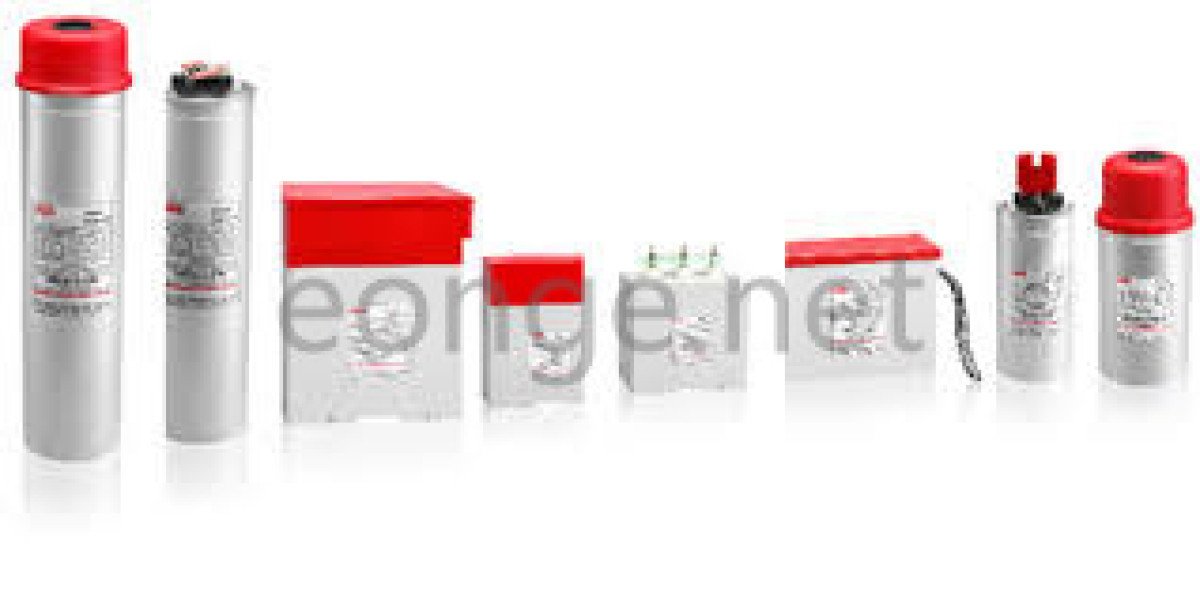
As industrial facilities and distribution networks continue to depend on increasingly complex electrical equipment, Shunt Power Capacitor technology provides an important approach to managing reactive power within AC systems. Motors, transformers, pumps, compressors, and other inductive loads can create reactive demand that influences current flow and infrastructure utilization. Properly designed capacitive equipment can help engineers establish a more balanced electrical environment while supporting efficient system operation.
The operating principle is based on the electrical characteristics of capacitive and inductive loads. Inductive equipment requires reactive power to establish magnetic fields, while capacitive components can provide an opposing reactive effect. When appropriately integrated into a power network, capacitive compensation can reduce unnecessary reactive current and support better utilization of electrical infrastructure. The exact engineering approach depends on load characteristics, network configuration, and operating conditions.
Material selection has a direct influence on the reliability of capacitive equipment. Dielectric materials must provide suitable insulation characteristics and maintain their properties under electrical and environmental stress. Conductive materials also require stable electrical performance and appropriate mechanical characteristics. Manufacturers therefore need to evaluate raw materials carefully before production, particularly when equipment is intended for demanding industrial environments.
Dielectric manufacturing is especially important because insulation separates conductive elements and contributes to safe electrical operation. Consistent material thickness, surface quality, bonding, and processing conditions can influence long-term stability. Manufacturing teams may use controlled forming, drying, curing, and inspection procedures to reduce process variation. Maintaining consistent production conditions helps create predictable electrical characteristics across different manufacturing batches.
Thermal behavior should also be considered during design and manufacturing. Electrical components naturally generate heat during operation, and temperature can influence the aging behavior of insulating materials. Engineers therefore evaluate structural arrangements and heat dissipation pathways when developing equipment. Appropriate enclosure construction and component spacing can also help manage operating conditions while providing physical protection.
Mechanical construction contributes to overall durability as well. Capacitive components may encounter vibration, transportation stress, installation forces, and environmental movement throughout their service life. Internal connections and structural elements must remain appropriately positioned under these conditions. Precision assembly helps reduce unnecessary mechanical stress and supports reliable electrical contact between different components.
Protection engineering is another important part of responsible design. Electrical networks can experience switching operations, abnormal conditions, transient events, and changing load characteristics. Appropriate protective structures and monitoring arrangements can help reduce operational risks. Protection should be considered together with insulation, conductive connections, enclosure design, and maintenance requirements rather than treated as a separate feature.
Manufacturing quality control provides the foundation for consistent equipment performance. Incoming material inspection can verify basic properties before production begins, while in-process checks help identify dimensional or assembly deviations. Final inspection can include visual, mechanical, and electrical evaluations appropriate to the product design. Batch traceability also gives manufacturers a useful framework for identifying production trends and supporting continuous improvement.
Automation is increasingly relevant to capacitive equipment manufacturing. Automated winding, forming, assembly, labeling, inspection, and data collection can improve production repeatability while reducing avoidable manual variation. Digital manufacturing systems can also provide production records that help engineers analyze process stability. Combining automation with experienced technical supervision allows manufacturers to maintain efficient workflows without losing control over critical quality factors.
Application planning is equally important for successful integration. Engineers should understand the characteristics of the electrical network before determining a compensation strategy. Load variation, operating schedules, equipment configuration, environmental conditions, and maintenance practices may all affect how capacitive equipment should be applied. A solution developed around real operating conditions is generally more practical than one selected solely from theoretical assumptions.
Sustainability can also influence modern manufacturing decisions. Longer service life, efficient material utilization, reduced production waste, and responsible packaging can all contribute to more resource-conscious electrical equipment production. Manufacturers may also evaluate production processes to reduce unnecessary energy consumption and improve material recovery wherever practical. These efforts can complement electrical performance objectives without compromising essential safety considerations.
As industrial electrification continues expanding, Shunt Power Capacitor solutions remain relevant to efficient and organized power network management. Their effectiveness depends on coordinated dielectric engineering, conductive materials, thermal considerations, mechanical construction, protection, and manufacturing quality. Shanghai Yongjin Electric Technology Co.,Ltd. continues developing professional electrical technologies and manufacturing capabilities, with further product information available through https://www.eonge.net/product for evolving energy infrastructure.