The extreme summer heat in Saudi Arabia, long motorway trips, traffic, and demanding desert routes can place significant loads on the vehicle’s transmission and drivetrain. Most drivers recall engine oil changes; however, gear oil is forgotten until the driver finds it hard to shift, the differential begins to make noises, or the transmission needs repair.
For KSA drivers, the correct selection of gear oil and proper maintenance can help protect gears, bearings, and other drivetrain components from excessive friction and wear. Regardless of whether you drive a daily commuter in Riyadh, or a family SUV in the city of Jeddah and a 4x4 that you use regularly to drive to the desert, knowing the lubricant needs of your vehicle is a significant aspect of proper maintenance.
Why Gear Oil Matters for Saudi Drivers
Gear oil is designed to lubricate components that transmit power in a vehicle’s drivetrain. It can be used in manual transmissions, differentials and transfer cases, final drives and some transaxles depending on the vehicle used.
These components work under high pressure. The gear teeth make a series of contacts as they transmit engine torque, and without proper lubrication, friction and heat can build up rapidly. Gear oil forms a protective film between moving surfaces, and appropriate additives control wear, oxidation, corrosion, and extreme-pressure conditions.
This is particularly relevant in Saudi Arabia, since ambient temperatures are not the only problem. Cars can also take a long time to drive on motorways at high speeds, drive slowly in traffic jams, transport heavy loads or drive through sand. Such operating conditions may increase the temperatures of the drivetrain and impose additional burdens on the lubricant.
Good transmission maintenance is more than merely checking the presence of fluid. The type, specification and viscosity must all be correct.
Gear Oil, Transmission Fluid and Synthetic Gear Oil
There is a tendency for drivers to interchange the terms “gear oil” and “transmission fluid” to describe the same thing, yet different transmission systems may require entirely different lubricants.
Manual gearboxes, differentials and final-drive units typically use traditional gear oil. They are usually labeled with an SAE viscosity grade, e.g., SAE 90, and a performance grade, e.g., API GL-4 or GL-5.
ATF is normally used in automatic transmissions. In contrast to traditional gear oil, ATF is required to provide lubrication, maintain hydraulic functionality, and carefully control friction in clutch packs and other components.
CVT fluid is another specialized lubricant used in continuously variable transmissions. Since CVTs operate on belt, chain, and pulley systems, their fluid needs to provide the friction characteristics required by that type of transmission.
Synthetic gear oil uses synthetic base stocks rather than conventional mineral base oils. Synthetic lubricants can exhibit high resistance to oxidation and retain useful viscosity over a broad temperature range, depending on the formulation. This may make synthetic gear oil the choice in tough operating environments, yet the term synthetic by itself is not the factor that can determine whether a product is fit for your car.
The performance standard and viscosity set by the manufacturer must come first.
Choosing Gear Oil for Desert Driving in Saudi Arabia
A popular myth is that desert driving gear oil should never be thin because Saudi Arabia is hot. Such practice may cause issues.
Transmissions and differentials developed today are designed to operate with a specified oil viscosity, component clearances, and friction properties. Using a lubricant that is much thicker than the one the manufacturer suggests can create either increased internal resistance or shifting behaviour. One that is too thin might not offer the protection that is needed under load.
The required SAE viscosity, API classification, and any manufacturer-specific approvals are to be found first in the owner’s manual for KSA drivers. The driving environment should then be considered in light of those requirements.
Sand driving, towing, hauling heavy loads, and long high-speed drives can be considered severe service, depending on the vehicle manufacturer. The severe-service maintenance schedule should be of special concern to drivers who frequently drive their SUVs and 4x4s in such environments; otherwise, they should use only standard service intervals.
The API GL-4 and GL-5 are also worth mentioning. GL-5 is not necessarily a further development of GL-4 in all applications. Some manual transmissions and synchronizer designs require a specific lubricant chemistry, and it is not recommended to replace one lubricant with another without the manufacturer’s permission.
How Saudi Heat Affects Transmission Maintenance
Maintenance of vehicles in hot weather requires greater attention to the lubricant’s condition, since heat accelerates most of the mechanisms that degrade oil over time.
During operations, transmission and differential temperatures can rise, particularly when the vehicle is in towing mode, climbing, driving in deep sand, or operating for extended periods. When oil is exposed to high temperatures over time, it is likely to oxidize, and some of the properties that make it effective in the lubrication process may be lost.
No single universal gear oil change requirement applies to all cars in Saudi Arabia. Some manufacturers recommend periodic replacement, while others have long service intervals. The proper time varies according to the vehicle and the type and condition of the transmission.
The drivers are thus advised to adhere to the maintenance schedule as shown in the owner’s manual and to check whether separate recommendations apply to severe driving conditions.
Leaks are also not to be neglected. Oil at the circumference of a differential housing, gearbox seal or drain plug can indicate that lubricant is evaporating. Abnormal whining, grinding, painful shifting, vibration or an irregular burning odor should also be professionally checked, rather than merely topping up the oil.
Choosing the Right Atlantic Oil Products
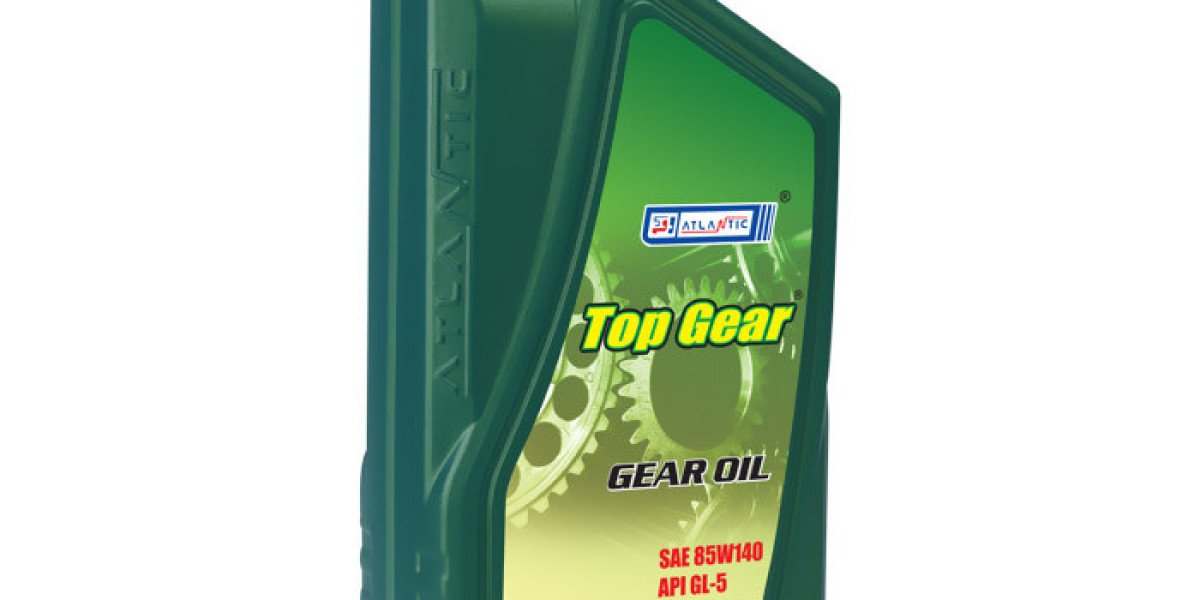
When a particular vehicle demands an API GL-5 type of gear lubricant in a desired SAE grade, Atlantic Oil Store KSA sells ATLANTIC Top Gear Oil SAE-90/140 API GL-5 4L. The product is designed for heavy-duty gear applications and meets the API GL-5 specification; however, drivers must ensure that the viscosity and specific gravity match those of their vehicle.
Automatic transmission owners whose vehicles specifically call for Dexron III, Dexron II E or compatible listed specifications can consider Atlantic ATF Dexron III 1L. It is a semi-synthetic ATF; more specifically, Atlantic states that the product should not be used in place of Dexron VI, Mercon V, Mercon SP or Mercon LV. The difference above demonstrates the importance of always specifying the transmission fluid, not just by appearance or brand.
For suitable continuously variable transmissions, Atlantic Synthetic CVT Fluid 1L is formulated to suit a variety of belt- and chain-type CVT systems and complies with various European and Japanese standards. It is still important to check vehicle compatibility with the owner’s manual.
Protect Your Transmission by Following the Correct Specification
Gear oil is very important in protecting some of the most heavily loaded parts of your car. Due to extreme temperatures, long-range trips, towing, and desert driving, the importance of proper lubricant choice cannot be overstated for Saudi drivers.
The simplest solution is straightforward: determine the transmission or differential specification required by the car manufacturer, select a lubricant that meets the specification, adhere to the suggested maintenance schedule, and check the system periodically for leaks or other evidence of wear.
If your car needs conventional gear oil, synthetic gear oil, automatic transmission fluid or special CVT fluid, it is more important to get the right specifications rather than the thickest and priciest one. Effective transmission maintenance can help your car withstand the harsh driving conditions encountered in Saudi Arabia.