
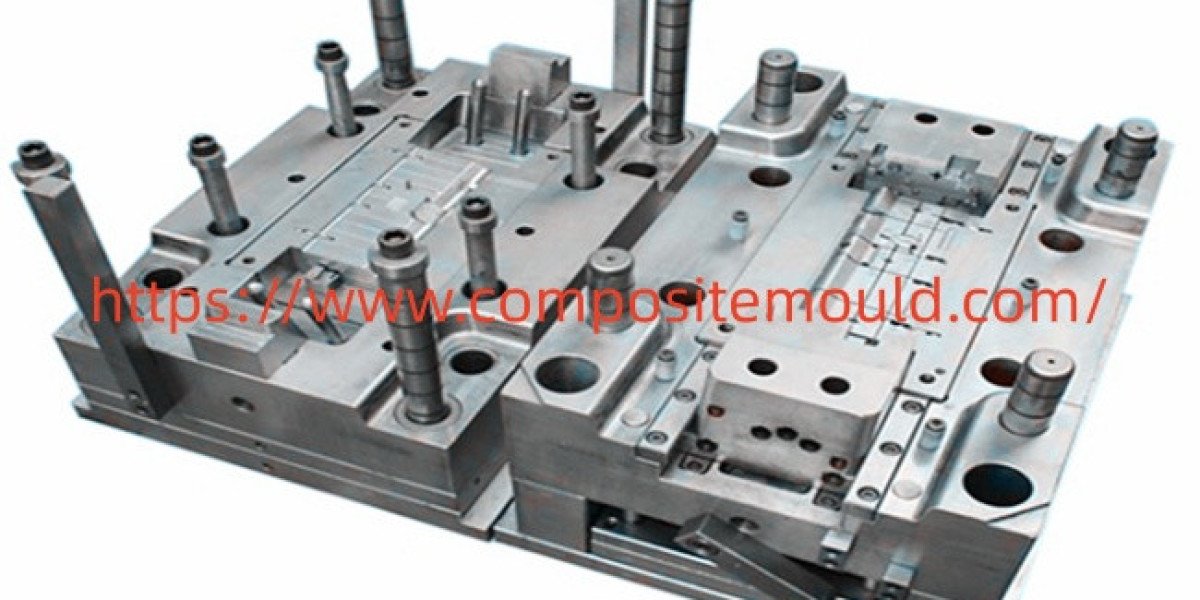
SMC Mould selection should start with a clear understanding of the product and its production requirements. Buyers should review the component drawing, dimensions, tolerances, surface requirements, expected production volume, and forming conditions before discussing the tooling structure. A detailed starting point gives the manufacturer useful information for evaluating the project and identifying technical considerations at an early stage.
Review the Product Drawing Carefully
The product drawing provides the foundation for tooling development. Buyers should make sure that dimensions, wall thicknesses, mounting points, holes, ribs, bosses, and other functional areas are clearly marked.
Special attention should be given to complex shapes and areas with tight tolerances. Draft angles, corner radii, parting lines, and possible undercuts can influence how the component is formed and released from the cavity.
If some surfaces are visible or have specific appearance requirements, these should also be identified before manufacturing begins. Clear drawings reduce the possibility of misunderstanding between the buyer and tooling team.
Consider the Tool Structure
Tool construction should correspond with the intended production requirements. Buyers can ask about the proposed cavity structure, inserts, fastening methods, heating components, and other important elements.
The expected production volume is also worth discussing. A tool intended for repeated production may require different considerations from one designed for a smaller production run.
Rather than focusing only on the material name, buyers can ask why a particular construction has been selected and how it relates to the application. This provides a more practical basis for comparing different quotations.
Check Heating Arrangements
Temperature control is an important part of the forming process. Buyers should ask how heating elements are positioned and how temperature is monitored during production.
The heating arrangement should take the component's size and geometry into account. Complex parts may require attention to temperature distribution across different areas of the cavity.
It is useful to discuss sensor locations, heating zones, control methods, and testing procedures before the tool is completed. These details can help buyers understand how the manufacturer plans to manage production conditions.
Examine Venting and Material Flow
Air evacuation and material movement deserve attention during the design stage. Poorly considered venting may create difficulties during forming, particularly around complex shapes and enclosed areas.
Buyers can discuss vent locations, charge placement, parting lines, and expected material flow with the tooling manufacturer. The manufacturer should be able to explain how these elements relate to the product geometry.
This discussion can also help identify potential production concerns before machining is completed.
Define Dimensional and Surface Requirements
Different components require different inspection standards. Buyers should identify critical dimensions and clarify which areas are functional, visible, or connected with other components.
Surface requirements should also be communicated early. Depending on the application, buyers may have specific expectations regarding texture, polishing, or surface appearance.
It is useful to agree on inspection methods in advance. Both sides can define how important dimensions will be measured and which areas require particular attention during sample approval.
Ask About Trial Production
Trial production provides an opportunity to check how the finished tooling performs with the intended production material and process conditions.
Before ordering, buyers can ask about the trial procedure, sample quantity, inspection items, and adjustment process. They can also confirm how modifications will be handled if trial results identify areas requiring attention.
A clear trial plan helps establish expectations before the tooling reaches the testing stage. It also gives both parties a structured way to discuss changes based on actual samples rather than drawings alone.
Consider Maintenance and Future Adjustments
Maintenance should be considered as part of the tooling project. Buyers can ask how the tool should be cleaned, stored, inspected, and maintained during production intervals.
Future product changes are another useful topic. If dimensions, mounting positions, or other features may be revised later, buyers can discuss whether certain inserts or structures could support reasonable modifications.
These conversations can be especially useful for projects expected to remain in production for an extended period.
Review Communication and Service
Technical specifications are important, but communication also affects the development process. Buyers should confirm how drawings will be reviewed, how technical questions will be handled, and how design changes will be documented.
A clear project process can help both sides track important information from initial design review through machining, trial production, inspection, and final approval.compositemould works with buyers on tooling-related requirements, including product drawings, structural details, manufacturing arrangements, trial discussions, and project communication. Buyers can review available tooling products and related information through https://www.compositemould.com/product/ Before placing an order, preparing a checklist can make supplier comparison easier. The checklist can include product geometry, critical dimensions, material requirements, heating, venting, surface finish, inspection standards, trial production, maintenance, delivery arrangements, and future modification needs. Reviewing these points together gives buyers a clearer basis for discussing the project and helps both sides establish practical expectations before manufacturing begins.






