
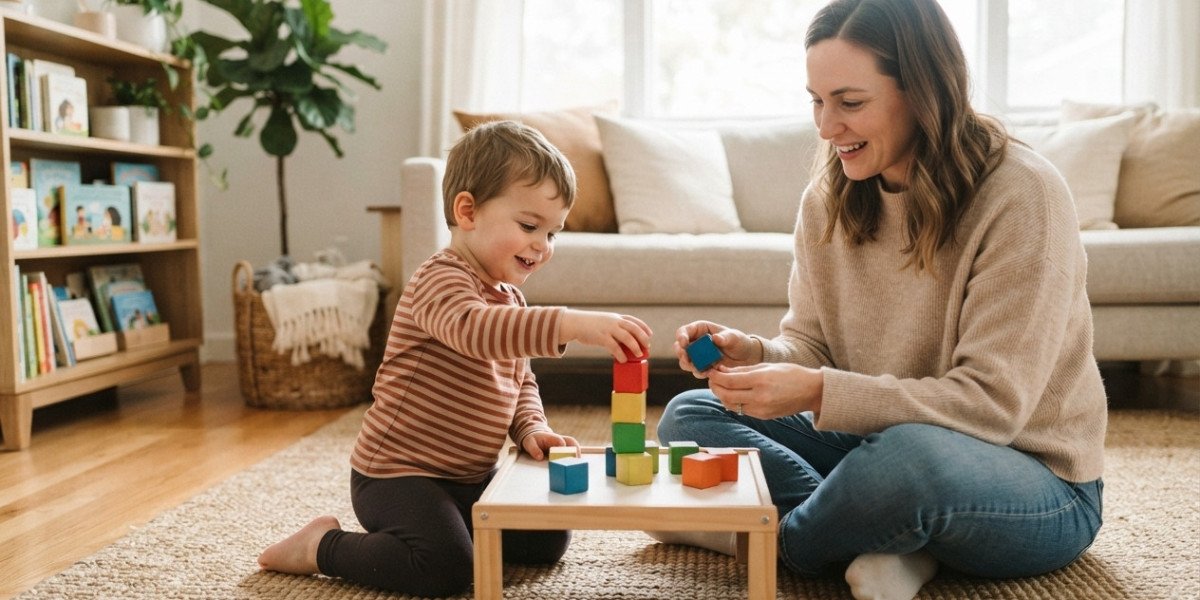
Why Should Parents Join Toddler Play?
Baby shop choices can provide toddlers with many fun ways to explore, but parents also have an important role in play. Sometimes, simply sitting beside your child and joining their activity can make play more enjoyable.
However, there is a difference between joining play and taking control. When adults take over, they may start deciding what the child should build, which piece to use, or what the game should be about.
Toddlers need space to make their own choices. Parents can support them without directing every step.
The goal is simple: play with your child while allowing your child to lead.
Follow Your Toddler’s Lead
One of the easiest ways to join play without taking control is to follow what your toddler is already doing.
If your child is building a tower, you do not need to decide what the tower should look like. Watch first and notice what your toddler is interested in.
You might say:
- “You are making a very tall tower!”
- “I see you used the blue block.”
- “Where should this block go?”
- “What are you making?”
These simple comments show interest without telling your child what to do.
Let Their Ideas Guide the Play
Toddlers often have their own ideas, even when their play does not make sense to adults.
A child may use a block as a phone, turn a box into a car, or put a toy animal inside a cup.
Instead of correcting the idea, join the pretend world.
If your toddler says the block is a phone, you can pretend to answer it. If they are pretending to cook, ask what they are making.
This gives your child control while allowing you to become part of the fun.
Avoid Giving Too Many Instructions
Parents naturally want to teach their children. But play does not always need to become a lesson.
Try not to give constant instructions such as:
“Put this here.”
“No, use this piece.”
“That's not how you do it.”
“Build it like this.”
Too many instructions can make a child feel that there is only one correct way to play.
Instead, give your toddler room to experiment. If they are having trouble, offer help only when they need it.
Use Questions Instead of Commands
Questions can encourage children to think and share their ideas.
Instead of saying, “Put the big block at the bottom,” you could ask, “What do you think will make the tower stronger?”
Instead of saying, “That piece goes there,” try, “Where do you think this piece might fit?”
The child may come up with a solution you did not expect.
Copy What Your Child Is Doing
A simple way to join play is to copy your toddler. If your child stacks two blocks, stack two blocks too. If they roll a toy car across the floor, roll another car beside them. This shows that you are interested in their activity without changing it.
You can slowly add your own actions, but let your child decide whether they want to follow your idea.
This approach can also create a natural back-and-forth interaction. Your toddler does something, you respond, and then your child responds to you.
Give Them Choices
Toddlers enjoy having some control over what happens during play. Instead of deciding everything for them, offer simple choices.
For example:
“Should we build with the blocks or play with the animals?”
“Do you want me to make a small tower or a big tower?”
“Should the car go here or there?”
Giving choices helps children feel involved. It also teaches them that their ideas and decisions matter.
Know When to Step Back
Joining play does not mean you need to stay involved every second. Sometimes your toddler may want you nearby but still want to play independently. You can sit close, watch, and respond when your child talks to you. There is no need to keep adding new ideas. If your child is happily playing alone, let them enjoy that time. Stepping back can be just as helpful as joining in.
Let Them Make Small Mistakes
If your toddler is trying to complete a puzzle or build something, you may notice the answer before they do. It can be tempting to fix it immediately. ut small mistakes are useful learning opportunities. Give your child a little time to try. If they become frustrated, offer gentle support rather than doing the whole task.
You might say, “That piece didn't fit. Would you like to try another one?”
This teaches your child that problems can be solved through trying again.
Choose Play That Allows Freedom
Some toys naturally encourage children to create their own games. Blocks, stacking toys, pretend-play sets, simple puzzles, toy animals, and art materials can give toddlers many ways to play. When choosing toys online, think about whether your child can use the toy in different ways.
An age-appropriate toy does not need to have lots of buttons or complicated features. Sometimes a simple toy gives a child more freedom to imagine and explore.
Parents looking for suitable options online can also find different types of toys and children's products through ToysUAE, an online store.
If you are browsing a baby store uae website, consider your child's age, interests, safety, and the type of play the toy can encourage rather than choosing something simply because it looks exciting.
Make Play About Connection
The most important part of playing with your toddler is not doing everything perfectly. Your child may not care whether the tower is straight or whether the pretend meal makes sense. They may simply enjoy having you nearby and interested in what they are doing.
Put your phone away when possible. Get down to your child's level. Watch their actions. Listen to their ideas. Even ten or fifteen minutes of focused play can create a meaningful connection.
Remember: Your Child Does Not Need a Perfect Playmate
Parents sometimes worry that they are not creative enough or do not know how to play properly. You do not need to become a professional entertainer.
Follow your toddler's interests. Copy them. Ask simple questions. Laugh with them. Let them make choices. Step in when they need help and step back when they want independence.
These small actions can make play more enjoyable for both of you.
Let Your Toddler Lead
The best way to join play without taking control is to remember that your toddler's play belongs to them. You are there to support, encourage, and enjoy the moment. When parents allow children to lead, toddlers get opportunities to make choices, express ideas, solve small problems, and build confidence.
So the next time your toddler starts playing, take a moment to watch before jumping in. You may discover that the best way to play together is simply to follow their little world and enjoy it with them.
FAQs
How can I play with my toddler without taking over?
Start by watching what your toddler is doing. Follow their idea, copy their actions, and make simple comments instead of giving constant instructions.
Should I correct my toddler during play?
Not every mistake needs to be corrected. If the activity is safe, allow your toddler to experiment. Step in when they need help or when there is a safety concern.
What should I do if my toddler does not want me to join?
Give them some space. You can stay nearby and show interest without forcing yourself into the activity. They may invite you to join later.
Is it better to let toddlers play alone sometimes?
Yes. Independent play can give toddlers time to explore their own ideas and make their own choices. Parents can stay nearby while allowing the child to play independently.
How long should parents play with toddlers?
There is no fixed amount of time. Even a short period of focused, distraction-free play can be meaningful. Quality and connection matter more than trying to reach a specific number of minutes.
What if my toddler asks me to do everything?
Offer support, but encourage your child to take part. You can say, “I'll help you start, and then you can try.” This gives them assistance while still allowing them to participate.
Can simple toys be good for parent-child play?
Yes. Blocks, puzzles, pretend-play toys, stacking toys, and other simple activities can create many opportunities for parents and toddlers to play together and share ideas.


