
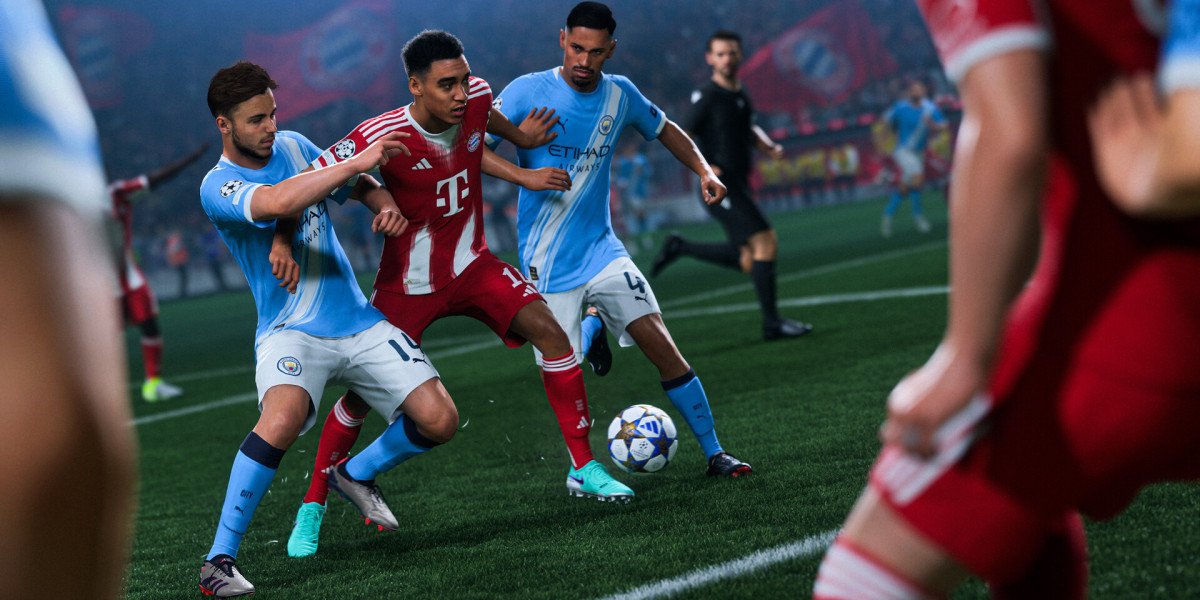
The 3-4-1-2 in FC27 puts an attacking midfielder behind two strikers, giving you a central passing triangle that can pull a defense apart. Before spending FC Coins on the shape, though, understand its trade-off: your wide midfielders have a lot of ground to cover, and careless attacks can leave space beside your back three.
How does the 3-4-1-2 work in FC27
The formation is built around connections through the middle. Your two strikers can occupy separate defenders while the attacking midfielder offers a pass between the lines, giving the player on the ball more than one forward option.
That central strength comes with a cost. With three defenders and no dedicated full-backs, you depend on the wide midfielders to provide width in possession and help protect the flanks when possession changes.
Don't force every attack through the same channel. If the middle is crowded, move the ball wide, draw a defender out, and look for the return pass into your attacking midfielder or a striker.
What are the best custom tactics for 3-4-1-2
Start with a setup that keeps your midfield connected to the front three. A patient buildup gives the wide players time to get into useful positions and gives your central midfielders a chance to offer a safe pass behind the attack.
Be selective about pushing players forward. If both wide midfielders and both central midfielders are ahead of the ball, losing possession can expose your back three. Keep at least one central option close enough to help when an attack breaks down.
Adjust to what happens on the pitch rather than copying a preset. If you're struggling to create chances, encourage more support around the strikers. If opponents keep running into open space after turnovers, ask your midfield to hold a more cautious shape.
What should wide midfielders do in 3-4-1-2
Your wide midfielders are the release valves for this formation. They stretch the pitch when your central players are crowded, offer an outlet during buildup, and can arrive in space when an opponent commits defenders to the two strikers.
They also need to recover. Choose players who can contribute at both ends, then watch how quickly they get back after a lost pass. If one side is repeatedly exposed, use a more restrained approach there instead of sending both wide players forward on every attack.
How should the midfield and strikers combine
Give your attacking midfielder room to receive rather than rushing a pass into the strikers every time. A simple exchange between that player and a central midfielder can change the angle and open a route into the box.
Different striker profiles can make the partnership easier to use. One can offer a target for a direct pass while the other looks for space beyond the defense. Watch their movement before releasing the ball; a pass played too early can leave its receiver isolated.
Behind them, position your central midfielders with a clear division of responsibility. Let one support the attack when space appears, while the other stays available for a return pass and helps protect against a counterattack.
How do you defend transitions with 3-4-1-2
When you lose the ball, first try to slow the forward pass rather than pulling a central defender out immediately. Use a nearby midfielder to challenge the carrier or cover the obvious route, giving your wide players time to recover.
Keep an eye on the space outside your back three. If an opponent reaches it, delay the attack and guide them away from a direct route to goal while your support arrives. Diving in can turn a manageable situation into an open chance.
The 3-4-1-2 rewards patient central combinations and disciplined recovery on the wings. Next, test the shape for a few matches, identify which side needs more protection, and only then decide if you want to buy Fut Coins for a player who fits that role.
Bauer
37 blog messaggi


