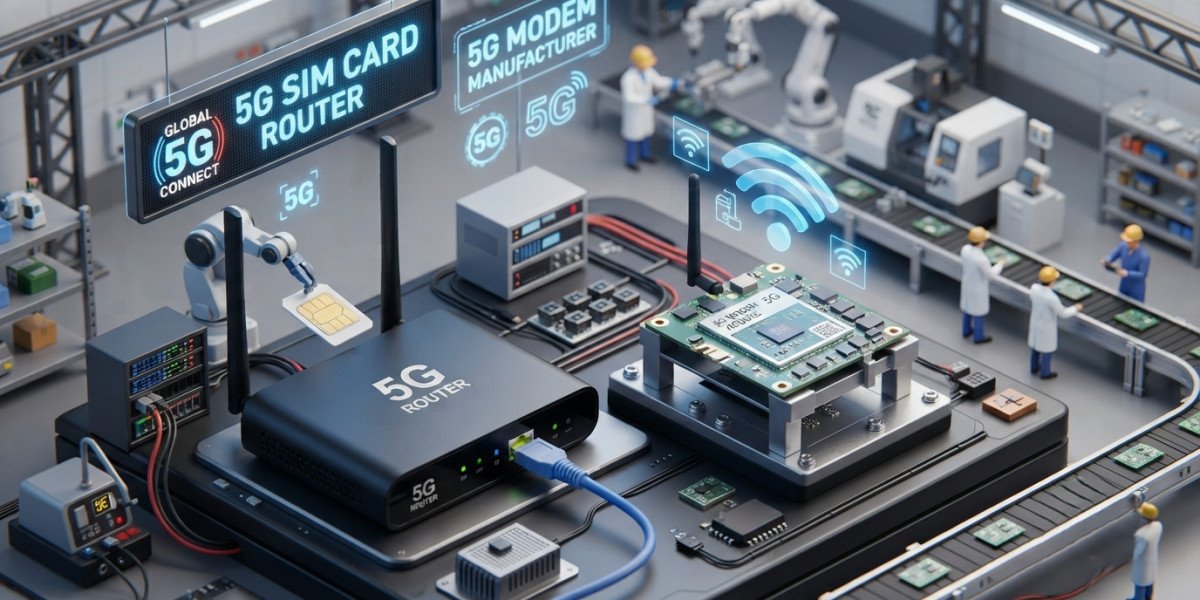
Traditional broadband connections are not always practical, especially in remote locations, temporary workplaces, and areas with limited wired infrastructure.
A SIM card router 5G offers an effective alternative by providing internet access through a 5G-enabled SIM card. It allows users to connect multiple devices without depending on a fixed broadband connection. Behind this technology, a reliable 5G modem manufacturer plays an important role in developing the hardware that enables high-speed wireless communication.
Understanding how these technologies work, their benefits, and their applications can help businesses choose the right connectivity solution.
What Is a 5G SIM Card Router?
A 5G SIM card router is a wireless networking device that uses a compatible SIM card to access a 5G mobile network. It receives internet connectivity through cellular signals and distributes that connection to other devices using Wi-Fi or Ethernet.
Unlike conventional broadband routers, which depend on fibre, cable, or DSL connections, cellular routers use mobile network infrastructure.
The main components of a 5G router include:
5G modem: Establishes communication with the cellular network.
SIM card slot: Allows the device to connect through a mobile network operator.
Wi-Fi technology: Shares internet access with wireless devices.
Ethernet ports: Provide wired connectivity for computers and other equipment.
Antennas: Help receive and transmit cellular and wireless signals.
Security features: Protect network access and connected devices.
These components work together to provide convenient and flexible internet connectivity.
Key Benefits of Using a 5G SIM Card Router
A modern SIM card router 5G provides several advantages for businesses and individual users.
High-Speed Internet Connectivity
5G technology supports high data speeds, making it suitable for video conferencing, online applications, cloud services, and large file transfers. Actual performance depends on network coverage, signal quality, and the service provider.
Easy Installation
Most 5G routers are designed for straightforward installation. Users generally need a compatible SIM card, an active data plan, and suitable network coverage to establish an internet connection.
Flexible Connectivity
These devices are useful in locations where installing fibre or cable broadband may be difficult, expensive, or time-consuming.
Multiple Device Support
Depending on the model, a 5G router can connect several devices simultaneously, including laptops, smartphones, smart televisions, security cameras, and business equipment.
Internet Backup Solution
Businesses can use a 5G router as a backup connection to maintain access to essential online services when their primary broadband connection experiences an interruption.
Understanding the Role of a 5G Modem Manufacturer
A 5G modem manufacturer develops the communication hardware that allows electronic devices to connect to fifth-generation mobile networks. These modems are essential components in cellular routers, industrial communication systems, IoT equipment, and other wireless networking products.
A manufacturer's technical expertise influences modem compatibility, performance, reliability, and integration.
When selecting a manufacturing partner, consider the following factors:
Technical expertise: Experience in cellular communication technology and modem development.
Network compatibility: Support for relevant 5G frequency bands and network standards.
Product quality: Reliable components and consistent manufacturing processes.
Performance testing: Testing for connectivity, temperature resistance, and operational stability.
Customisation: Options for different hardware configurations and applications.
Technical support: Product documentation, integration guidance, and after-sales assistance.
Choosing the right manufacturer can help businesses find suitable communication hardware for their networking requirements.
Important Features to Consider Before Choosing a 5G Router
Not all 5G routers offer the same specifications. Comparing essential features can help buyers select a device that meets their requirements.
| Feature | Importance |
|---|---|
| 5G network support | Enables next-generation cellular connectivity |
| Frequency bands | Ensures compatibility with mobile operators |
| SIM compatibility | Supports the intended mobile network |
| Wi-Fi standards | Determines wireless networking capabilities |
| Ethernet ports | Supports wired device connections |
| Antenna configuration | Influences signal reception |
| Security features | Helps protect connected devices |
| Operating temperature | Determines suitability for different environments |
Before purchasing a SIM card router 5G, always check the device specifications and confirm compatibility with your preferred network operator.
Applications of 5G Modem and Router Technology
The flexibility of 5G connectivity makes it useful across different industries and applications.
Industrial Automation
Manufacturing facilities can use 5G-enabled equipment for machine monitoring, data communication, and remote operational management.
Smart Cities
Smart infrastructure projects can use cellular connectivity for surveillance systems, environmental sensors, traffic monitoring, and connected public services.
Transportation and Logistics
5G routers and modems can support vehicle tracking, fleet communication, logistics management, and connected transportation systems.
Commercial Businesses
Retail stores, offices, and commercial establishments can use cellular routers for payment terminals, digital displays, security systems, and business communication.
Remote Locations
Construction sites, rural facilities, and temporary offices can benefit from 5G internet where fixed broadband infrastructure is unavailable.
Difference Between a 5G Modem and a 5G Router
Although these devices work together, their functions are different.
| 5G Modem | 5G Router |
|---|---|
| Connects equipment to a cellular network | Distributes internet access to connected devices |
| Handles mobile network communication | Manages local network connections |
| Can be integrated into other devices | Often includes an integrated modem |
| May not provide Wi-Fi independently | Usually supports Wi-Fi |
| Used in embedded and networking applications | Used in homes, offices, and industries |
A modem establishes the cellular connection, while a router shares that connection across a local network.
How to Select the Right 5G Modem Manufacturer
Selecting a suitable manufacturer is an important decision for businesses developing or purchasing wireless networking equipment.
Consider these practical steps:
Review the manufacturer's experience in 5G technology.
Compare available modem specifications and supported network bands.
Check product testing and quality assurance procedures.
Understand hardware integration and customisation options.
Evaluate technical support and warranty policies.
Confirm that the products meet your application requirements.
A dependable 5G modem manufacturer should provide technically suitable products, consistent quality, and reliable support throughout the product lifecycle.
Frequently Asked Questions
1. What is a SIM card router 5G?
It is a wireless router that uses a compatible 5G SIM card to receive mobile internet and share the connection with other devices.
2. How does a 5G SIM card router work?
It connects to a mobile network through its internal modem and distributes internet access through Wi-Fi or Ethernet.
3. Is a 5G router better than a traditional broadband router?
It depends on the application. A 5G router offers installation flexibility, while fixed broadband may provide more consistent performance in locations with reliable fibre infrastructure.
4. Can a 5G router support multiple devices?
Yes. Most models support multiple connected devices, although the number depends on the router's specifications.
5. What does a 5G modem manufacturer do?
A 5G modem manufacturer develops communication hardware that enables compatible devices to connect to 5G cellular networks.
6. Can 5G modems be used in industrial applications?
Yes. They can support industrial IoT, remote monitoring, connected machinery, and wireless communication systems.
7. Do all 5G routers support every SIM card?
No. Compatibility depends on supported frequency bands, network standards, carrier restrictions, and device configuration.
8. Can a 5G router work as a backup internet connection?
Yes. Businesses can configure a 5G router as a secondary connection to support network continuity.
9. What factors affect 5G router performance?
Signal strength, network coverage, supported frequency bands, mobile network congestion, and device capabilities affect performance.
10. What should I consider when buying a 5G modem?
Check network compatibility, data speeds, hardware specifications, operating conditions, security, and manufacturer support.